How to Trace Sicilian Ancestors: Complete Beginner’s Guide (2026)
How to Trace Sicilian Ancestors: Complete Beginner’s Guide (2026)
Millions of people around the world have Sicilian roots — especially in the United States, Canada, Australia, Argentina, and other countries shaped by Italian immigration.
For many families, tracing Sicilian ancestors starts with curiosity:
◉ Where did my family come from?
◉ What town did my great-grandparents leave behind?
◉ Are there still records or relatives in Sicily today?
What often begins as simple genealogy research can eventually become something much more personal: a journey back to the places where your family story began.
In this guide, you’ll learn how to trace Sicilian ancestors step by step using family documents, Italian civil records, online archives, and local research in Sicily itself.
Why So Many Americans Have Sicilian Roots
Between the late 1800s and early 1900s, millions of Sicilians emigrated abroad searching for better economic opportunities.
Large numbers settled in:
◉ New York
◉ New Jersey
◉ Louisiana
◉ Chicago
◉ Philadelphia
◉ Boston
◉ Argentina
◉ Australia
Because of this massive migration, many people today discover that their family history leads back to small towns across Sicily.
In many cases, surnames, dialects, and traditions survived for generations — even after families left the island.
Start With Family Information at Home
Before searching Italian archives, begin by collecting as much family information as possible.
Even small details can become extremely important later.
Try to gather:
✅ full names of ancestors
✅ birth and death dates
✅ marriage certificates
✅ immigration papers
✅ naturalization records
✅ passports
✅ family letters
✅ military records
✅ cemetery information
✅ old family photos
Speaking with older relatives can also reveal stories, nicknames, or town names that were never officially documented elsewhere.
Sometimes a single handwritten note or family memory can unlock the entire research process.
Identify the Exact Sicilian Town of Origin
This is the most important step in Sicilian genealogy research.
Without the exact town of origin, tracing ancestors in Italy becomes much more difficult.
Many records in Sicily are organized locally by municipality (“comune”), not nationally.
Common places to search for the ancestral town include:
◉ Ellis Island passenger manifests
◉ census records
◉ naturalization papers
◉ marriage records
◉ death certificates
◉ church records
Keep in mind that town names were often misspelled after immigration.
For example:
◉ Linguaglossa may appear with spelling variations
◉ small Sicilian villages were sometimes recorded incorrectly by immigration officials
◉ surnames were frequently Americanized
Patience is essential during this phase.
Search Italian Civil Records
Once you identify the ancestral town, you can begin searching Italian civil records.
These records may include:
◉ birth certificates
◉ marriage certificates
◉ death records
◉ family registries
Most Sicilian civil records began around the early 1800s, although some church archives are much older.
Important places to search include:
Comune Offices
Local municipalities often preserve original civil records.
These archives may contain handwritten documents dating back generations.
State Archives
Some records have been transferred to regional archives or digitized collections.
Church Archives
Parish churches sometimes preserve baptism, marriage, and burial records from before civil registration existed.
Use Online Genealogy Websites
Several online resources can help trace Sicilian family history before visiting Italy.
Useful genealogy websites include:
Free access to millions of genealogy records, including Italian civil documents and family trees.
➥ Ancestry
One of the largest genealogy databases for immigration, census, and family history research.
The official Italian government archive for digitized civil records and historical documents.
Useful for searching immigration and passenger arrival records for ancestors who entered the United States through Ellis Island.
These websites may contain:
● scanned birth records
● passenger manifests
● military documents
● immigration records
● census information
However, many Sicilian records are still not fully digitized.
This is one reason why local research in Sicily often becomes necessary.
Visiting Sicily to Continue the Research
For many families, visiting Sicily becomes the most emotional part of the genealogy journey.
Walking through ancestral towns transforms names on paper into real places and memories.
A Sicily ancestry trip may include:
✓ visiting municipality archives
✓ searching cemetery records
✓ exploring ancestral neighborhoods
✓ locating family homes
✓ meeting local residents
✓ discovering churches connected to the family history
Many travelers describe these moments as life-changing experiences.
Standing in the same streets where great-grandparents once lived creates a connection that online research alone cannot provide.
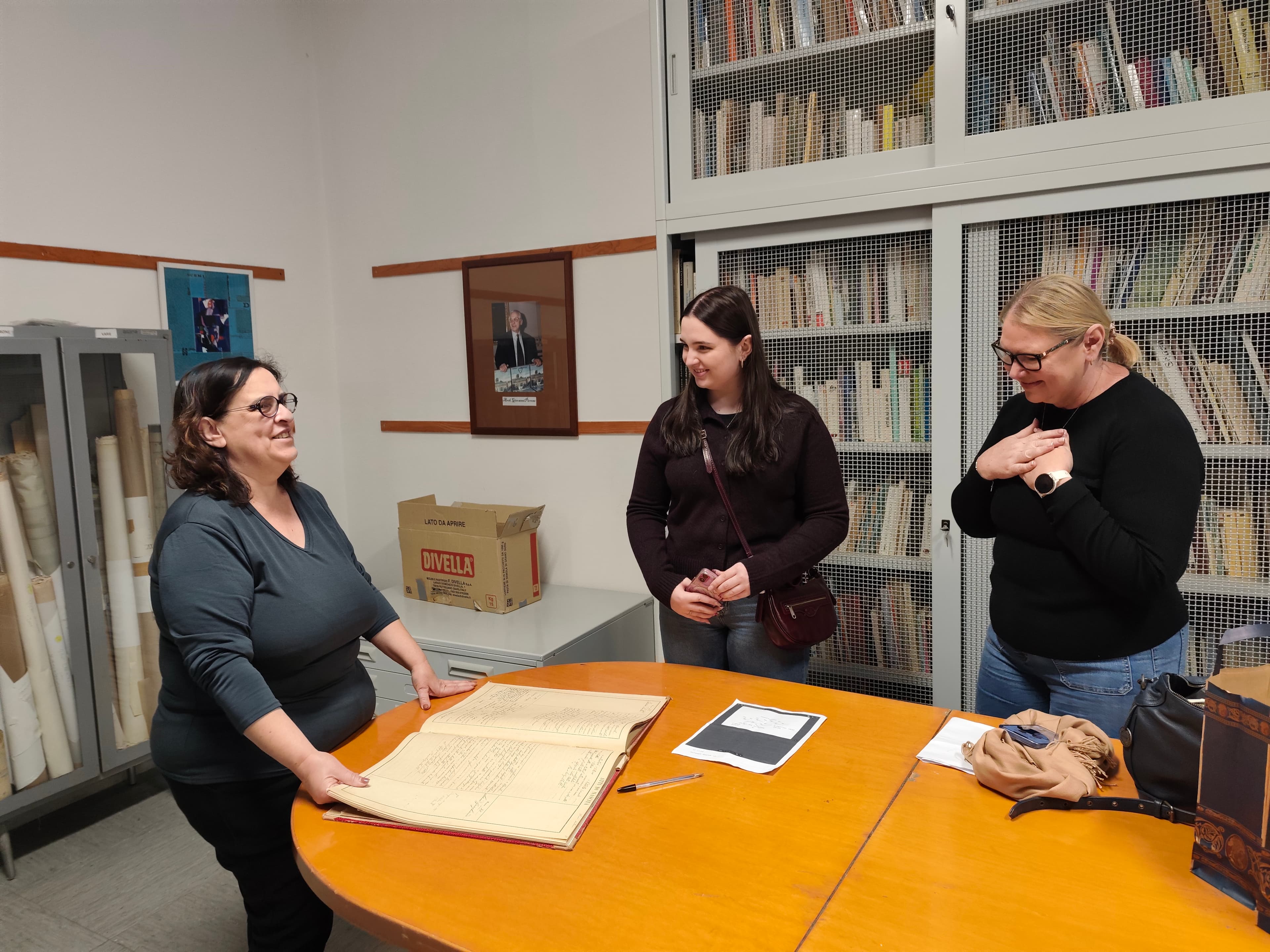
One recent family heritage journey through Sicily included visits to Linguaglossa, Randazzo, and Realmonte, where a family from New York was able to locate original records, visit ancestral towns, and reconnect with their Sicilian roots across generations.
You can read the full story here:
➔ Real Sicily Genealogy Tour Story: A Family Heritage Journey Through Sicily
Common Problems During Sicilian Genealogy Research
Tracing Sicilian ancestors is rewarding, but it can also present challenges.
Some common difficulties include:
Name Changes After Immigration
Many surnames were modified after arriving abroad.
For example:
☒ letters were removed
☒ spellings changed
☒ names were translated into English
Missing or Damaged Records
Some records may be incomplete or unavailable due to wars, natural disasters, or poor preservation.
Difficult Handwriting
Older Italian records are often handwritten in cursive and may be difficult to interpret.
Dialect Variations
Sicilian dialects sometimes changed the pronunciation or spelling of surnames and town names.
Unknown Town of Origin
This remains the biggest obstacle for many families beginning their research.
Can You Hire a Private Sicily Genealogy Tour?
Yes — many travelers choose to combine genealogy research with a personalized private tour across Sicily.
A Sicily genealogy tour may include:
✅ archival research assistance
✅ municipality visits
✅ cemetery visits
✅ translation support
✅ customized itineraries
✅ private transportation
✅ local guidance
✅ cultural experiences across Sicily
This type of experience allows families not only to research their ancestry, but also to experience Sicily through its food, traditions, landscapes, and local culture.
Why Sicilian Heritage Travel Is So Emotional
Genealogy research is not only about documents.
It is about reconnecting with identity, family history, and personal roots.
For many people, seeing the towns where their ancestors lived creates an emotional bridge between generations.
Old photographs, handwritten birth records, churches, cemeteries, and family streets suddenly become real.
What once felt like distant history becomes something deeply personal.
And for many families, these journeys become more than vacations — they become part of their family legacy.
Frequently Asked Questions About Sicilian Genealogy Research
How can I find my Sicilian ancestors?
Start by collecting family documents, identifying the ancestral town in Sicily, and searching civil or church records connected to that municipality.
Are Sicilian birth records online?
Some are available online through FamilySearch and Portale Antenati, although many records still require local archive research.
What if I do not know my family’s town in Sicily?
Search immigration records, naturalization documents, marriage certificates, and passenger manifests for clues about the town of origin.
Can I visit my ancestors’ town in Sicily?
Yes. Many travelers organize personalized Sicily ancestry tours to visit ancestral towns, archives, cemeteries, and family locations connected to their history.
Are Sicilian genealogy tours worth it?
For many families, visiting Sicily in person becomes the most meaningful part of the research experience because it creates a direct emotional connection with their roots.
Ready to discover Sicily?
Turn inspiration into reality. Explore our curated private tours or build a custom itinerary matching your interests.